
Blog
How to Choose the Right Neighborhood for Your Lifestyle and Needs
By Deepti Neupane
•
3 months ago
•
4 views
Blog
By Deepti Neupane
•
3 months ago
•
4 views
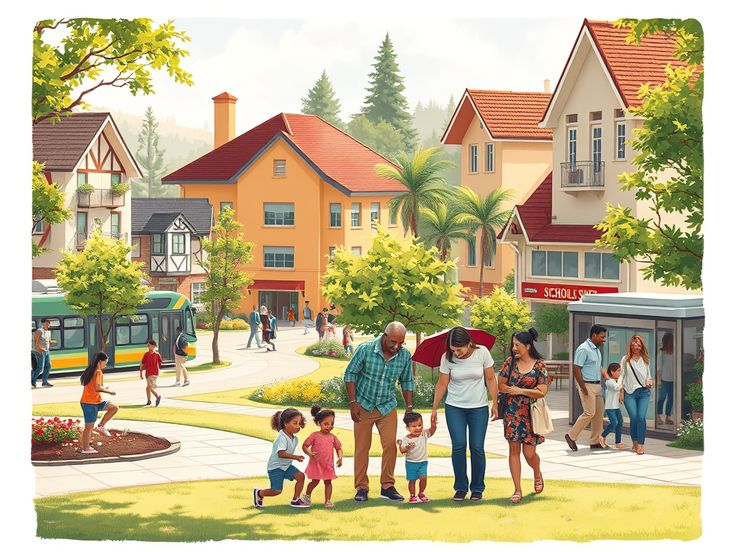
Selecting a neighborhood is more than just a logistical choice it is an investment in your daily happiness and long term financial security. While a house provides shelter, the neighborhood provides your community, your convenience, and your lifestyle.
At Property in Nepal, we believe that finding the right "where" is just as important as finding the right "what." Use this professional framework to evaluate your next location.
Start by defining your non-negotiables. Are you looking for the high energy pulse of a commercial hub or the quiet sanctuary of a residential suburb? Map your "Weekly Orbit" the places you visit most often and ensure your neighborhood supports your lifestyle rather than complicating it.
The quality of local schools is a primary driver of property value. Even for buyers without children, homes in high performing school districts act as "blue-chip" investments, offering better resale value and market resilience during economic shifts.
Peace of mind is the ultimate luxury. Beyond reviewing local safety statistics, look for "active community" indicators: well maintained public spaces, thriving local businesses, and residents engaged in outdoor activities. A vibrant street life is often the best sign of a secure environment.
Time is your most valuable resource. Evaluate your proximity to major transit arteries and workplace hubs. A shorter commute reduces daily stress and increases your personal "free time" equity, significantly impacting your overall quality of life.
A neighborhood has many personalities. We recommend visiting a potential area at three distinct times:
High quality neighborhoods offer "15 minute living" the ability to reach groceries, wellness centers, and dining within minutes. Proximity to these lifestyle "anchors" simplifies your routine and adds intrinsic value to your property.
Investigate the city’s master plan. Upcoming infrastructure, such as new parks or transit lines, can lead to significant appreciation. Conversely, understanding commercial zoning prevents surprises like a new high rise obstructing your view or increasing local traffic.
A neighborhood should fit your financial strategy beyond the mortgage. Consider local property taxes, utility costs, and the "lifestyle tax" (the average cost of local services and goods) to ensure the area aligns with your long term budget.
The most candid insights come from the people who live there. Engage with locals to understand the neighborhood's pros and cons that aren't visible on a listing. Their perspective provides the "lived-in" truth of the area.
1. How do I balance my budget with my desired neighborhood? Focus on "value add" areas neighborhoods adjacent to established, high priced districts. These areas often offer similar lifestyle benefits at a lower entry price with higher potential for appreciation.
2. Why is school quality important for investors or buyers without kids? School districts act as a "price floor." Because there is always a high demand for homes near good schools, these properties tend to hold their value better during market corrections and sell faster.
3. How can I verify the safety of an area effectively? Utilize online crime heat maps for data, but also look for "pride of ownership" on the street. Well-kept gardens, clean sidewalks, and neighborhood watch signs are strong indicators of a safe, attentive community.
4. How much weight should I give to future developments? Significant weight. Public investment (like new transit or parks) almost always precedes private wealth. However, ensure the development timeline aligns with your residency plans to avoid living in a permanent construction zone.
5. What is the most common mistake in neighborhood selection? Ignoring the "Micro Vibe." Buyers often look at the city or ward but fail to notice the specific street. Always evaluate the specific street level.
6. Should I trust my intuition during a viewing? Yes. Data tells you if a neighborhood is a good investment, but your "gut" tells you if it’s a home. If a neighborhood feels right and the data supports it, you’ve likely found your match.
Conclusion Finding the perfect neighborhood is a marathon, not a sprint. By balancing data-driven research with personal intuition, you can find a location that does more than just meet your needs it enhances your life. At Property in Nepal, we specialize in matching elite clients with neighborhoods that mirror their ambitions.
Contact us today for a curated tour of the city’s most promising districts.