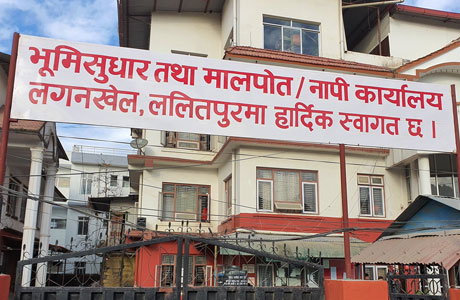
Selling a house in Nepal is a meticulous legal journey that centers around one specific institution: the Malpot Office (Land Revenue Office). Whether you are a first time seller or a seasoned investor, having your paperwork in perfect order is the only way to ensure a smooth, dispute-free transfer of ownership.
Why is Documentation So Critical?
Every document you gather is authorized and recorded by Malpot, a government body. This process serves three vital purposes:
- Legal Recognition: It proves to the state that the transaction is valid.
- Authorization: It confirms the seller actually has the right to sell.
- Dispute Resolution: In case of future disagreements, these archived records are the final reference used for legal solutions.
The "Gold Standard" Documents (Required for Everyone)
Regardless of who owns the house, these five items are the foundation of your Malpot file:
- Property Ownership Certificate (लालपुर्जा): The original title deed.
- Citizenship Certificate (नागरिकता): A valid copy of the owner’s ID.
- Tax Clearance Slip (कर चुक्ता कागज): Proof from the Ward Office that all house taxes are paid to date.
- Land Revenue Tax Receipt (मालपोत कर): Verification of tax payment at the Malpot office.
- Blueprints & Building Plans (चारकिल्ला): Documents showing the location, boundaries, and measurements.
Requirements Based on Ownership Type
For ease of navigation, find your specific category below to see the additional steps required.
1. House Under Single Ownership
If you are the sole owner and no one else’s name is on the deed, it is considered sole ownership.
- Consent of Coparceners (अँशियार): Even with one owner, family members (Husband, Wife, Father, Mother, Son, and Daughter) have birthrights to ancestral property (पुर्खयौली सम्पत्ति).
- The Rule: Every coparcener must be present at Malpot as a witness with their Citizenship Certificate.
- If they can't attend: You must present a formal Letter of Consent (मन्जुरीनामा) or a No-Objection letter from them.
2. House Under Joint Ownership
If the house is owned by two or more people, the consent of all listed owners is mandatory.
- Presence: Both/all owners must be physically present at Malpot.
- Documents: You need copies of Citizenship certificates for all owners and all coparceners, along with the Gold Standard documents listed above.
3. House Under Company Ownership
When a corporate body sells a property, the Board of Directors (कार्यकारी समिति) must authorize the sale. Required Additional Documents:
- Board Resolution (कार्यकारी निर्णय): Written proof of the decision to sell.
- Letter of Authority (अख्तियारनामा): Grants a specific person (member or employee) the power to sell.
- Company Validity: Registration Certificate, MoA (प्रबन्धपत्र), and AoA (नियमावली).
- Financial Compliance: Company Tax Clearance, PAN/VAT registration, and the official Company Seal.
4. House Owned by a Minor
In Nepal, a minor is anyone under 18. If a minor owns the property, the sale requires:
- Birth Certificate (जन्म दर्ता): A copy for the minor.
- Guardian Identification: Citizenship copy of the legal guardian representing the minor.
5. Owner Residing Abroad
If the owner is a Nepali citizen living overseas and cannot be physically present:
- Power of Attorney (अधिकृत वारिसनामा): A special document signed by the owner and authorized by the court/embassy, giving a representative the legal power to act as the owner.
- ID Copies: Citizenship certificates for both the owner and the appointed attorney.
Frequently Asked Questions (FAQ)
1. How much is the registration fee for land in Nepal? The fee depends on the location and road access:
- Inside Kathmandu Metro: NPR 7,012.4
- Main Road: NPR 2,000 (if <4 Anna) OR NPR 500 per Anna (if >4 Anna).
- Side Road: NPR 1,500 (if <4 Anna) OR NPR 400 per Anna (if >4 Anna).
- Unpaved Road: NPR 1,000 (if <4 Anna) OR NPR 300 per Anna (if >4 Anna).
- Track Road: NPR 800 (if <4 Anna) OR NPR 200 per Anna (if >4 Anna).
2. What is the minimum land required to build a house? The minimum requirement is 2.8 Anna, and in residential areas, the roads must be at least 6 meters wide.
3. What is the Malpot tax rate? Rates vary by location, ranging from a minimum of NPR 3,000 to a maximum of NPR 915,000 per aana.
4. How much land can a person own in Nepal? There is a "ceiling" on land ownership:
- Hilly Region: 70 Ropani
- Terai Region: 10 Bigha
- Kathmandu Valley: 25 Ropani
5. What is the tax on land sales? For individuals, it is 5% if owned for more than 5 years and 10% if held for less than 5 years. For companies, the rate is consistently 20% regardless of the holding period.
Conclusion
Navigating Malpot requires patience and precision. Whether you are selling as an individual, a company, or from abroad, ensuring these documents are ready will save you months of delays.
Need professional guidance? We provide a step-by-step detailed orientation to help you sell your property in the most convenient way possible. Contact us today for a consultation!